

The lunchbox budget problem: how school meals quietly change a family’s monthly spending
School lunches can quietly reshape a Canadian family’s monthly grocery bill when packed meals, paid lunches and top-up shops are not planned
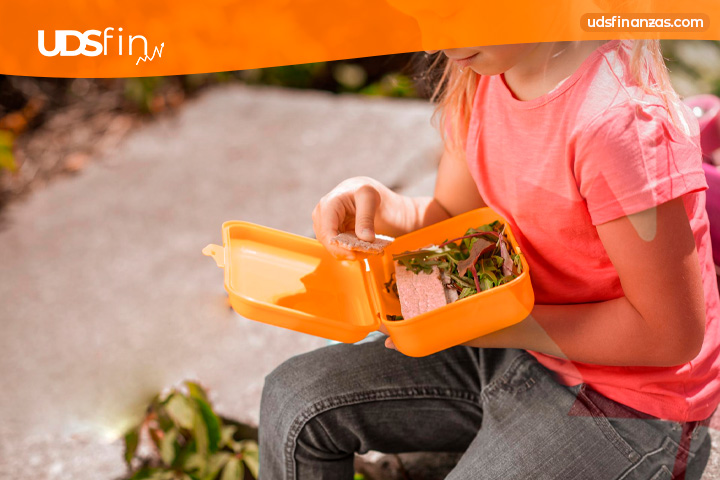
A school lunch budget sounds like a small thing until you are standing in the kitchen on a Sunday night, staring into the fridge, trying to figure out what can become five days of lunches without another grocery run.
There is bread, but not much. There are apples, but one has a bruise and another will probably come back uneaten. The yogurt, but only the big tub, which means someone has to wash containers. The crackers are almost gone. Cheese is disappearing faster than expected. And, of course, the school calendar says Friday is pizza day, which somehow always shows up right after you have already bought lunch stuff for the week.
None of this feels like a major money decision. It feels like parenting. It feels like getting through the week.
But for many Canadian families, school meals quietly change the monthly budget. A few dollars here, a small top-up shop there, one hot lunch order, one lost water bottle, one box of granola bars that was supposed to last until Friday but vanished by Tuesday night. By the time the month ends, the grocery bill feels heavier, the credit card balance may be a little higher, and nobody is quite sure when lunch became so expensive.
That is why the school lunch budget deserves more attention. Not in a strict, guilt-heavy way. Parents already carry enough of that. The point is not to shame anyone for buying cheese strings, juice boxes, packaged snacks, or cafeteria lunches. Sometimes convenience is not laziness. Sometimes it is survival before 8 a.m.
The real issue is visibility. If school food keeps hiding inside the regular grocery bill, families cannot see how much it actually costs. And if they cannot see it, they cannot adjust it.
Across Canada, food costs are still a real pressure point.
Statistics Canada reported that food purchased from stores rose 2.8% year over year in August 2026, after rising 3.1% in July. Canada’s Food Price Report 2026 projected that the average family of four would spend $17,571.79 on food in 2026, up to $994.63 more than the previous year. Meanwhile, Canada’s National School Food Policy estimated that a participating family with two children could save as much as $800 a year in grocery costs through school food support.
Those numbers are national, but they feel personal at home. They show up in the cart at Loblaws, Sobeys, Metro, Walmart, Costco, No Frills, Save-On-Foods, or the local independent grocer. They show up when berries cost more than expected, when deli meat does not stretch through the week, and when a parent buys snacks they know the kids will actually eat because wasting food feels worse.
So, no, the lunchbox is not just a lunchbox. It is a little snapshot of how a family manages money, time, stress, nutrition, school routines, and the everyday hope that tomorrow morning will be less chaotic than today.
Why school lunches are so easy to underestimate
Most families do not get one neat bill for school lunches. There is no monthly statement that says, “Here is what you spent feeding your kids between the morning bell and the afternoon pickup.”
Instead, the cost comes in bits and pieces.
A loaf of bread goes into the regular grocery shop. Yogurt cups get added because they are easy. Crackers go into the cart because every lunch needs something crunchy. Fruit gets bought twice because the first batch disappeared. Then there is a hot lunch order, a milk program, a cafeteria day, or a few dollars sent through the school app.
On their own, these purchases feel normal. Together, they become a pattern.
That is where the school lunch budget gets sneaky. A family may think lunches cost $40 or $50 a week, but once they count the extra snacks, top-up trips, paid lunches, and food waste, the real number may be much higher.
And honestly, this happens to organized people too. It is not just a “bad budgeting” problem. School lunches are unpredictable because children are unpredictable. A child can love wraps in September and refuse them in October. A lunch that worked last week can come home untouched this week. A thermos meal can sound brilliant at night and look completely unappealing by noon.
Parents are not always overspending because they are careless. Often, they are spending because they are trying to avoid waste, hunger, complaints, and morning battles.
The real cost of “just a few things”
The phrase “just a few things” deserves its own line in the family budget.
A parent stops after work for bread and bananas. That should be cheap. But then the cart picks up yogurt, muffins, crackers, juice boxes, maybe a rotisserie chicken for dinner, and a coffee because it has been a long day. Suddenly, a $12 errand turns into $48.
This is the top-up trap.
It does not feel like overspending because the items are useful. They are not random luxuries. They are food. Still, when top-up shops happen every week, they can quietly break the grocery plan.
For example, if a family spends an extra $35 every Thursday on lunchbox items and quick fixes, that is about $140 a month. That money could have gone toward a credit card payment, winter boots, sports registration, gas, transit, or savings.
The point is not to eliminate every extra grocery stop. Life happens. The point is to notice whether the “small” stops have become part of the real monthly cost.
Convenience is not the enemy
There is a certain kind of budget advice that makes everything sound easy. Buy the big tub. Bake the muffins. Chop the vegetables. Portion the snacks. Cook from scratch. Pack leftovers. Never buy single-serve anything.
Sure. In a calm week, that can work.
But many Canadian families are not living in a calm week. They are dealing with commutes, shift work, daycare pickups, hockey practice, piano lessons, homework, laundry, snow pants, wet mittens, and mornings where someone cannot find their other shoe.
So, convenience has a place.
Individual yogurt cups, granola bars, cheese strings, applesauce pouches, snack packs, and pre-cut fruit all cost more per serving, but they also solve real problems. They save time, reduce mess, help kids pack part of their own lunch and they make it more likely that the food gets eaten.
A realistic school lunch budget should not pretend convenience is forbidden. Instead, it should decide where convenience actually helps.
Maybe packaged snacks are for the two busiest mornings of the week. Maybe cheese strings are worth it, but juice boxes are not. Perhaps individual yogurt cups are kept as backup, while the big tub is used most days. Maybe Friday is the planned easy day because everyone is tired by then.
That is not failure. That is budgeting like a real person.
Cheap food is not cheap if it comes home uneaten
Parents know this one in their bones.
A bag of carrots may be cheaper than snack packs. But if the carrots come home every day, they are not saving money. A homemade sandwich may cost less than a cafeteria lunch. But if it sits in the lunch bag until 3:30 p.m., it is not doing its job.
Food waste is part of the lunchbox budget, even though families rarely count it that way.
Instead of fighting the same lunch battle every day, parents can treat uneaten food as information. If whole apples keep coming home, try slices. The sandwiches are not working, try crackers and cheese, wraps, pasta salad, soup, rice bowls, or leftovers in a thermos. If vegetables only get eaten with dip, the dip may be worth the extra step.
The goal is not to let children run the grocery budget. But giving them two or three realistic choices can reduce waste. Apple or orange. Wrap or sandwich. Yogurt or cheese. Pizza day this week or next week.
Small choices can make lunch feel less like a daily negotiation.
What Canadian numbers show about the lunchbox problem
The table below uses public Canadian data to put school meal spending into context. The numbers will not match every household, of course, but they help explain why this small daily routine can become a real monthly pressure.
| Budget pressure | Real Canadian data point | What it can mean at home |
|---|---|---|
| Grocery inflation | Food purchased from stores rose 2.8% year over year in August 2026, after a 3.1% increase in July. Source: Statistics Canada | Lunchbox staples may cost more even when families buy the same foods. |
| Annual food spending | The average family of four was projected to spend $17,571.79 on food in 2026, up to $994.63 more than the previous year. Source: Canada’s Food Price Report 2026 | School lunches are part of a larger food affordability problem, not a tiny side expense. |
| School food funding | Canada committed $1 billion over five years to build and expand a National School Food Program. Source: Government of Canada | School food programs may reduce grocery pressure for some households, depending on local access. |
| Potential grocery relief | Participating families with two children could save as much as $800 a year in grocery costs. Source: National School Food Policy | That is about $67 a month, which can matter when the budget is already tight. |
| Food insecurity | In 2024, about 9.8 million people, or 24.0% of Canadians, lived in households reporting some form of food insecurity. Source: Statistics Canada | For many families, school meals are connected to financial stability, not just convenience. |
These numbers matter because they take the conversation out of the “I must be doing something wrong” zone. Many families are dealing with the same pressure. Food costs more. School routines create repeat spending. And small expenses add up faster when the rest of the budget is already stretched.
Paid school meals can help, but only if they replace something
Pizza day is not the villain. Neither are cafeteria lunches, milk programs, breakfast programs, or hot lunch orders.
In fact, paid school meals can be very helpful. They can save time, reduce food waste, support a school fundraiser, or give a parent one less lunch to pack during a busy week. In some cases, a school meal program may also ease real grocery pressure at home.
The problem starts when families pay for school meals and still buy groceries as if every lunch is coming from home.
If Friday is pizza day, the grocery list should reflect four packed lunches, not five. The school offers breakfast twice a week and the child actually eats it, the family may need to adjust breakfast groceries. If a hot lunch program covers one or two days, that should show up in the weekly plan.
Otherwise, the household pays twice: once through the school and once at the grocery store.
That is how a school lunch budget grows without looking obvious.
Check the school calendar before shopping
A simple habit can help: check the school calendar before the grocery run.
Look for pizza days, field trips, early dismissals, sports days, spirit days, classroom celebrations, and hot lunch deadlines. Some weeks need five full lunches others need three lunches and extra snacks. Some need food that can be eaten quickly after school before practice.
Planning around the actual week helps families buy less food that spoils and fewer items that never get used.
It also lowers that Sunday-night panic. And honestly, lowering the panic has financial value too.
How school lunches can affect credit card debt
For many Canadian households, groceries go on a rewards credit card. That can work well if the balance is paid in full every month. Points, cash back, and grocery rewards can help a little.
However, if the balance carries over, unplanned lunch spending becomes part of a more expensive problem.
A $40 top-up shop does not feel like debt when the parent is buying lunch food. It feels necessary. But if that charge sits on a credit card balance with interest, it costs more than $40 over time.
This is where visibility matters again. A family does not need to feel guilty for buying food. But it does need to know whether lunchbox spending is quietly adding to a balance that is already hard to pay down.
One practical option is to set a weekly amount for school food and keep it separate from the main grocery budget. Some families use debit for lunch items. Others use a note in their phone. Others set aside a small amount at the start of the week. The method does not have to be fancy.
It just has to stop the lunchbox from disappearing into the credit card statement.
A simple lunch system that works on real mornings
A lunch system does not need to look cute. It just needs to work when everyone is half-awake.
One easy method is to think in three parts: main, filler, backup.
The main is the anchor. It could be a sandwich, wrap, pasta salad, soup, rice bowl, leftovers, eggs, hummus and pita, tuna, salmon, or anything filling that follows school rules.
The filler adds variety. This might be fruit, vegetables, yogurt, cheese, crackers, popcorn, muffins, or a simple homemade snack.
The backup saves the morning. It could be applesauce, a granola bar, a freezer muffin, crackers, or another shelf-stable option that prevents an emergency stop at the store.
This system makes shopping clearer. Instead of buying random “lunch stuff,” parents can ask: do we have enough mains, fillers, and backups for the week?
That one question can make the school lunch budget much easier to control.
A realistic monthly example
Imagine a Canadian family with two school-aged children. They pack lunch most days, pay for one hot lunch per child each week, and usually do one small top-up shop before Friday.
At first, they think lunches cost about $55 a week. After tracking for a month, they realize the real number is closer to $85. That includes about $60 in lunch groceries, $15 in hot lunches, and $10 in top-up extras.
Over four weeks, that is $340.
Now they make a few small changes. They move hot lunch to every other week, use a big yogurt tub on calmer mornings and keep a few individual cups for rushed days, freeze muffins twice a month, keep crackers and applesauce as backupsand they still buy convenience foods. They still let the kids enjoy pizza day or just stop letting every lunch decision happen at the last minute.
If the monthly cost drops from $340 to $280, the family gets $60 back.
That $60 may not sound huge, but it can pay for school photos, part of a sports fee, a transit pass, winter gloves, or an extra credit card payment. In a tight month, $60 is not nothing. It is breathing room.
Use school food support without shame
Canada’s National School Food Program recognizes something families already know: school meals affect children and household budgets at the same time.
Where programs are available, they can help reduce grocery pressure, support learning, and make mornings less stressful. Some schools offer breakfast. Others offer snacks, lunches, milk programs, or pay-what-you-can options. Access varies by province, territory, school board, and community, so families need to check what their own school offers.
But one thing is important: there should be no shame in using available support.
A family can be loving, responsible, hardworking, and still need help stretching the grocery budget. Using a school meal program is not a personal failure. It can be a practical financial choice.
Personal finance is not about doing everything alone. It is about using the resources available to keep the household steady.
The lunchbox is small, but the pattern is not
The lunchbox may be small, but the pattern behind it is powerful.
It includes grocery inflation, picky eating, convenience, waste, paid lunch days, school calendars, credit card use, and the pressure parents feel to send their children into the day fed and cared for.
When all of that stays hidden inside the general grocery bill, families lose the chance to manage it clearly. But once school meals have their own number, parents can make better choices. Maybe the answer is fewer top-up shops. Maybe it is one planned paid lunch a week. Perhaps it is using a breakfast program. Maybe it is buying some convenience foods without guilt and cutting waste somewhere else.
A school lunch budget is not about making lunch boring or joyless. It is about making the month less surprising.
Some weeks will still be messy. A container will disappear. A child will reject a favourite food for no obvious reason. A parent will forget pizza day. Someone will need an emergency snack. That is normal. Family life is not a spreadsheet.
But a visible lunch budget gives the household a little more control. It helps parents see what is worth paying for, what keeps coming home uneaten, and what needs to be planned before the grocery bill gets too high.
In the end, the lunchbox problem is not really about sandwiches, snacks, or pizza day. It is about noticing a daily expense before it becomes a monthly squeeze.
And for many Canadian families, that small shift can make the school year feel a little less rushed, a little less expensive, and a little easier to carry.